What I Learned in Taking the Italian B1 Language Exam for Citizenship

And what I would do differently the next time
If there is a next time. I don't know if there will be as it takes at least six weeks to learn the results, but if I were able to simply step back in time and give my pre-test self a few pertinent notes, these would be them:
Note #1: Relax, Steve, it's Just a Test
No, really. You know how angsty you get around test taking (full disclosure, I wasn't always this way...mostly in college my reaction was, What test?). But in this case it is just one test and while it might feel like a lot is riding on passing it—Italian citizenship for a foreigner depends on scoring at least 60% in all of four categories: listening, speaking, writing, and grammar—despite that, I still have permission to be here. Failing this exam won't mean packing up and leaving Italy. So chill out.
Note #2: Listen to what others are telling you, passing is good enough
As mentioned, you have to score 60% in all four categories. Score less in just one of them and you don't pass the exam. Which, yeah, okay, that sounds pretty intense and well worth the effort to not be chill. But there are no extra points for being first or shame in being the last, unlike the diagramming tests of my eighth grade English teacher. It's just 60%, pass/fail. So don't wig out if you haven't successfully crammed five different verb tenses into your practice (there are 21 verb tenses in total!) or fret that you don't know precisely when to use sulla vs nel, or dagli vs dei, or lose a night's sleep because you can't recall all the many combinations of direct and indirect objects, every possible conjunctive adverb, every centuries-old rule. And you certainly don't need to know the most common Italian swear words.
In a nutshell, Steve, do the best you can by studying this:
- 3 verb tenses. Presento, passato prossimo, and imperfetto. The rest can—and should—come later. I did these three, plus two others and it bogged me down with Pressure (yes, with a capital P). The verb avere (to have) is the workhorse of the Italian language, know it inside and out.
- Know basic sentence structure, especially prepositions. Since I already assigned the workhorse to verbs, think of these—di, a, da, in, con, su, per, tra, fra—as the wheelbarrow. They carry a lot of weight and one slip up in the wrong direction will send them spilling over the ground.
- Practice Listening
- Practice Writing
- Practice Speaking
- Beyond that, my advice—and this is just my advice, so no nasty emails from anyone who follows it and fails
miserably—is to fit as many words as possible into an anke deck, or wherever you get your flash cards, and study it twice a day, morning and night. Word acquisition, in my opinion, is paramount to passing. This is also the method I used to pass the Italian Driver's License test. If you are looking to narrow your word acquisition down to a few specific topics, the exam book I used listed work, school, free time, health, and the environment, all of which are good places to start. But, in my opinion, that's like saying English speakers only ever use the word bullshit as reference to the waste produced by, well, bulls. No language works that succinctly.
Note #3: Practice Listening, Writing and Speaking
I know, I already listed this, but repetition is crucial to learning something new like a language. Practice makes perfect, they say. But also practice makes permanent, so take no shortcuts here (if there are even any). Remember the ultimate goal here is to LEARN THE LANGUAGE. Not pass the test. Passing the test is cool, very cool, in fact, and a good measure of how well you are learning the language, but it's not the goal, nor the Way of the Force to borrow a phrase. True understanding is found in the simpler things of everyday life, the many bindings we share together. Sentence structure. Meaning. Our quest for understanding. These are your true aspirations and it will make no difference how many words you know or how many grammar rules you can recite if you can't hear, write or speak a simple sentence, usually on the fly, one after another, often while someone else is talking.
"You Must Feel The Force Around You. Here. Between You, Me, The Tree, The Rock, Everywhere, Yes. Even Between The Land And The Ship." - Yoda
Note #4: Learning Italian while speaking English in the house makes it a hundred times harder.
A: Okay, in all fairness, I already know this advice Future Steve.
Q: Then why didn't you follow it?
A: Because.
Q: Because why?
A: Because it's been our habit for thirty-plus years to speak English with one another. I'm 62 years old, old habits blah blah blah, yada-yada.
Future Steve: This will be why you failed.
Today Steve: Vaffanculo, testa di cazzo (finally those curse words come in handy!)
Note #5: Give yourself plenty of time.
The mind doesn't absorb new things. They seep in, slowly.
I'm not going to belabor this point. We all know this about time, it matters only in the present. Or, to steal another Yoda quote, “Of the moment, be. In the moment, live. The art of remaining in the present, learn. Neither the past nor the future exists.”
Make. Time. Count.
Final Note:
The exam wasn't easy, but it also wasn't hard. Could I have prepared more? Yeah, probably. Could I have prepared smarter? Definitely. My biggest takeaway was this: Once I had finished the test and was walking to the car I actually found myself satisfied, content, even happy with the experience of it all, despite feeling like a wreck in the moments/days/weeks leading up to it.
It wasn't horrible, being tested on how much I knew. I liked it in the same way I've liked anything in my life that showcased talent or capability, whether that was to run a marathon or write a book. I appreciated the measure, despite not being the one to choose the length of the yardstick.
The exam was just a peek into one particular moment of time, a chance to see where I stand and in the end it proved to me that I am learning Italian. I can hear it and understand, I can speak it. I can make it just fine in this beautiful, strange, incredible world in which I've inserted myself.
I am getting there, slowly but surely.
Regardless what score comes back on the test.
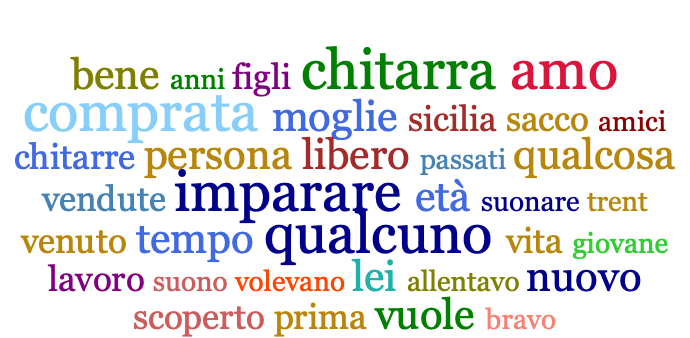
For those who played along, here are the words from the photo above unscrambled. While not 100% word for word, of course, this is what I spoke of in the speaking portion of the exam:
Suono la chitarra da quando ero più giovane. Ma non suonavo bene.
Non mi allenavo e i miei amici non volevano suonare con me.
Sono passati trent'anni. Avevo un lavoro, dei figli, una vita.
Prima sono venuto in Sicilia ho vendute le miei chitarre
Ma qui ho scoperto un sacco di tempo libero
Ne ho comprata un’altra e poi ne abbiamo comprata una anche a mia moglie perché lei vuole imparare la chitarra da sempre.
Imparare qualcosa di nuovo fa bene, soprattutto con una persona della nostra età e con qualcuno che ami.
I've been playing the guitar since I was younger. But I wasn't very good.
I didn't practice, and my friends didn't want to play with me.
Thirty years have gone by. I had a job, kids, a life.
Before I came to Sicily, I sold my guitars.
But here I’ve discovered I have a lot of free time.
I bought another one, and then we bought one for my wife too, because she’s always wanted to learn to play the guitar.
Learning something new is good for you, especially at our age and with someone you love.
So what's next, you might be asking (not future Steve, but you, kind reader).
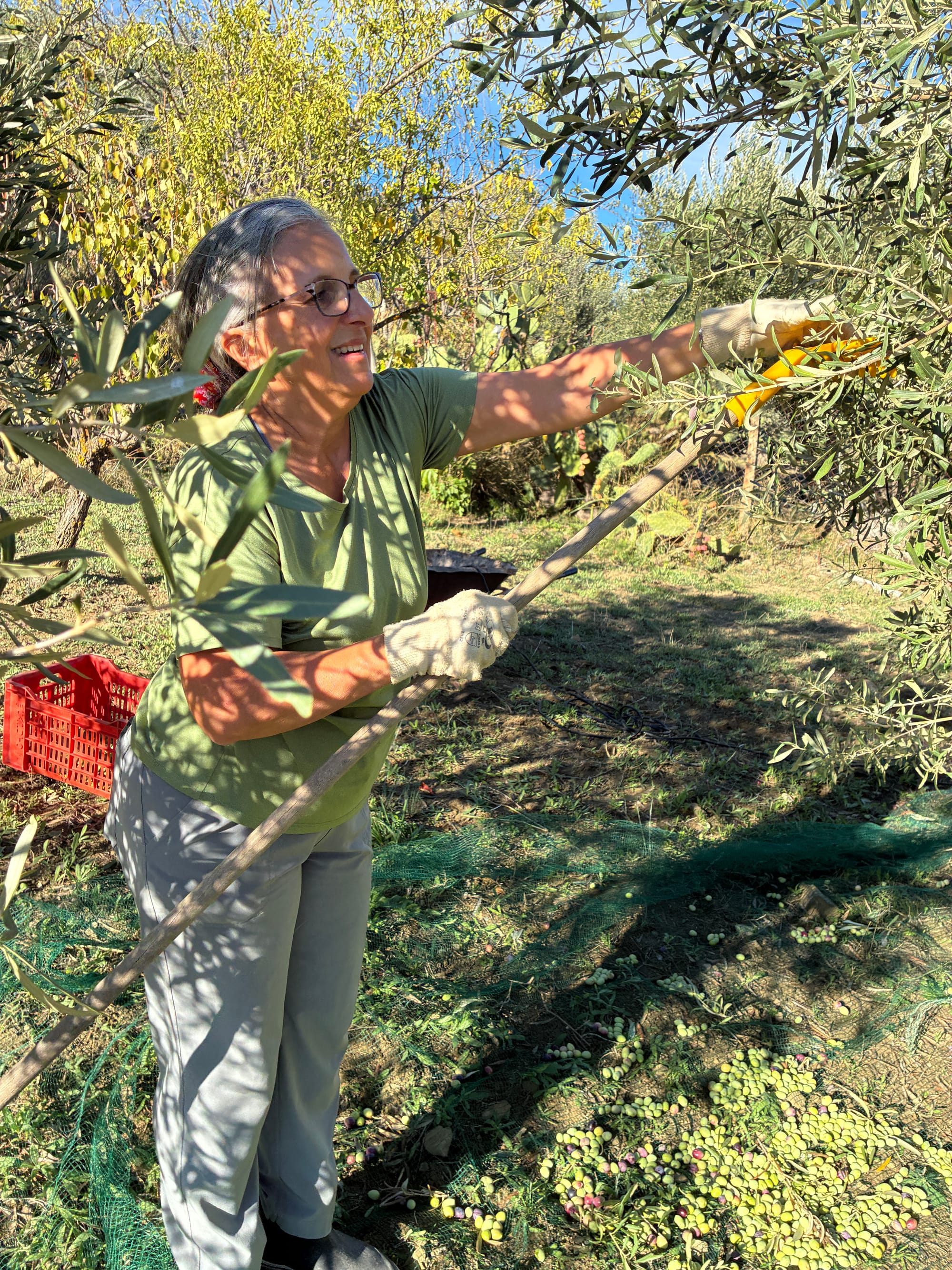
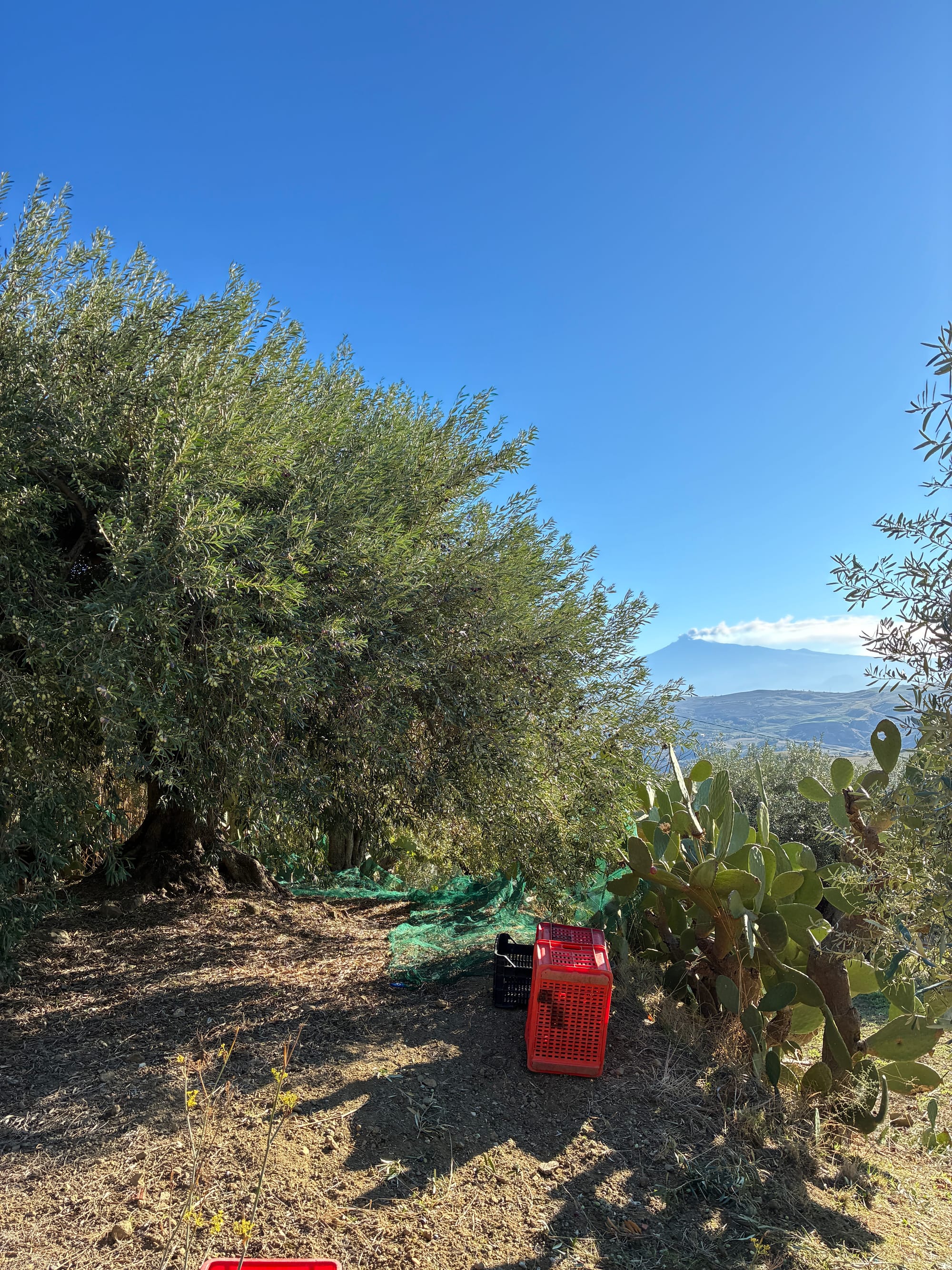
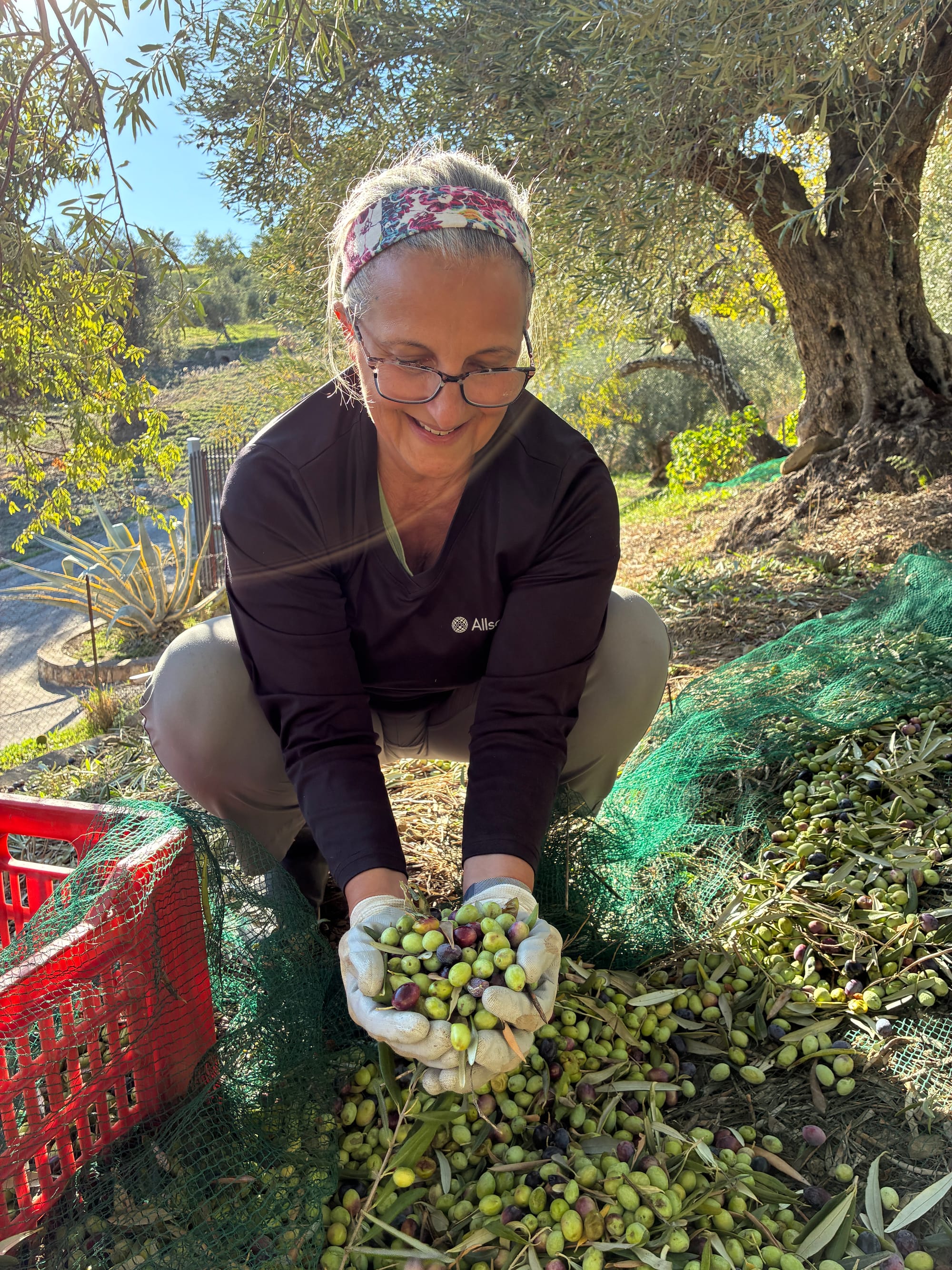
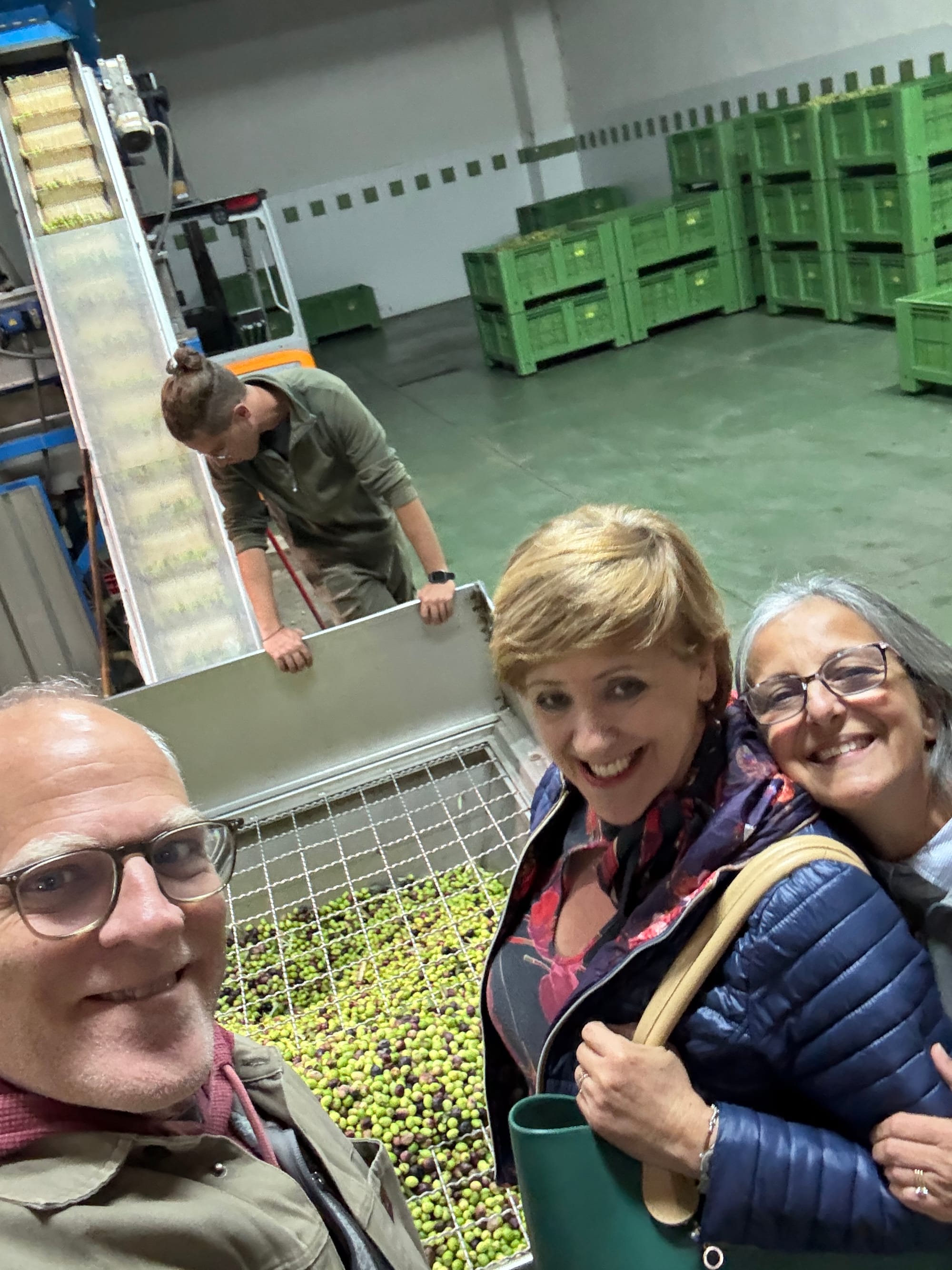
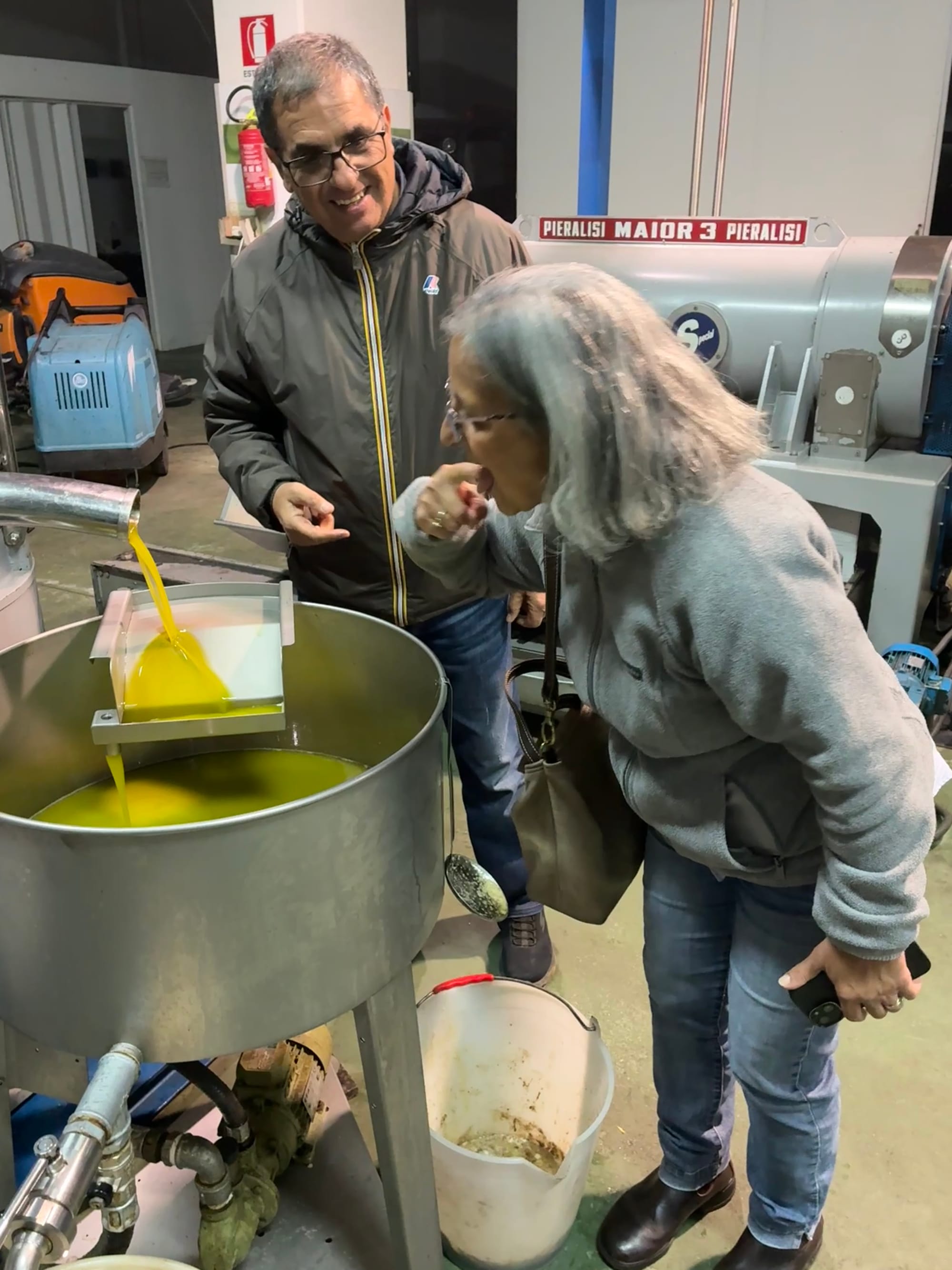
I'm not sure. I'd like to get back to writing and will eventually, I'm sure. I miss it a great deal. Stay tuned. This week though we are involved in another Italian Autumn tradition. I'll let the images speak for themselves and follow with a short video from our first harvest in Sicily.
Alla prossima!
SLG